
The House That Hammer Built Vol. 3: 1955-1958
Wayne Kinsley continues what might be a definitive history of Hammer. Here, four essential years are covered.
HORROR/SCIENCE FICTION
by Chris Gullo
12/16/20252 min read
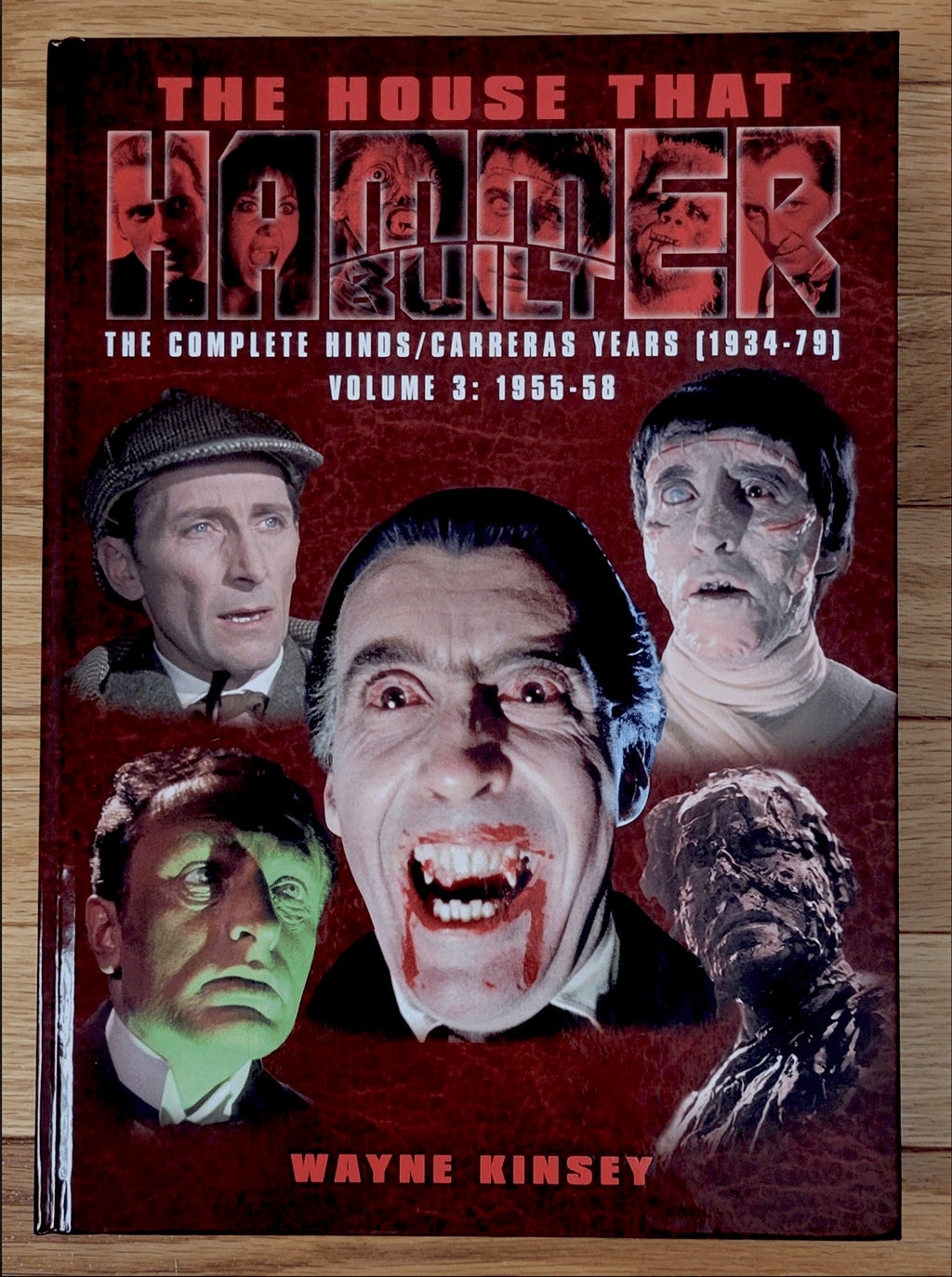
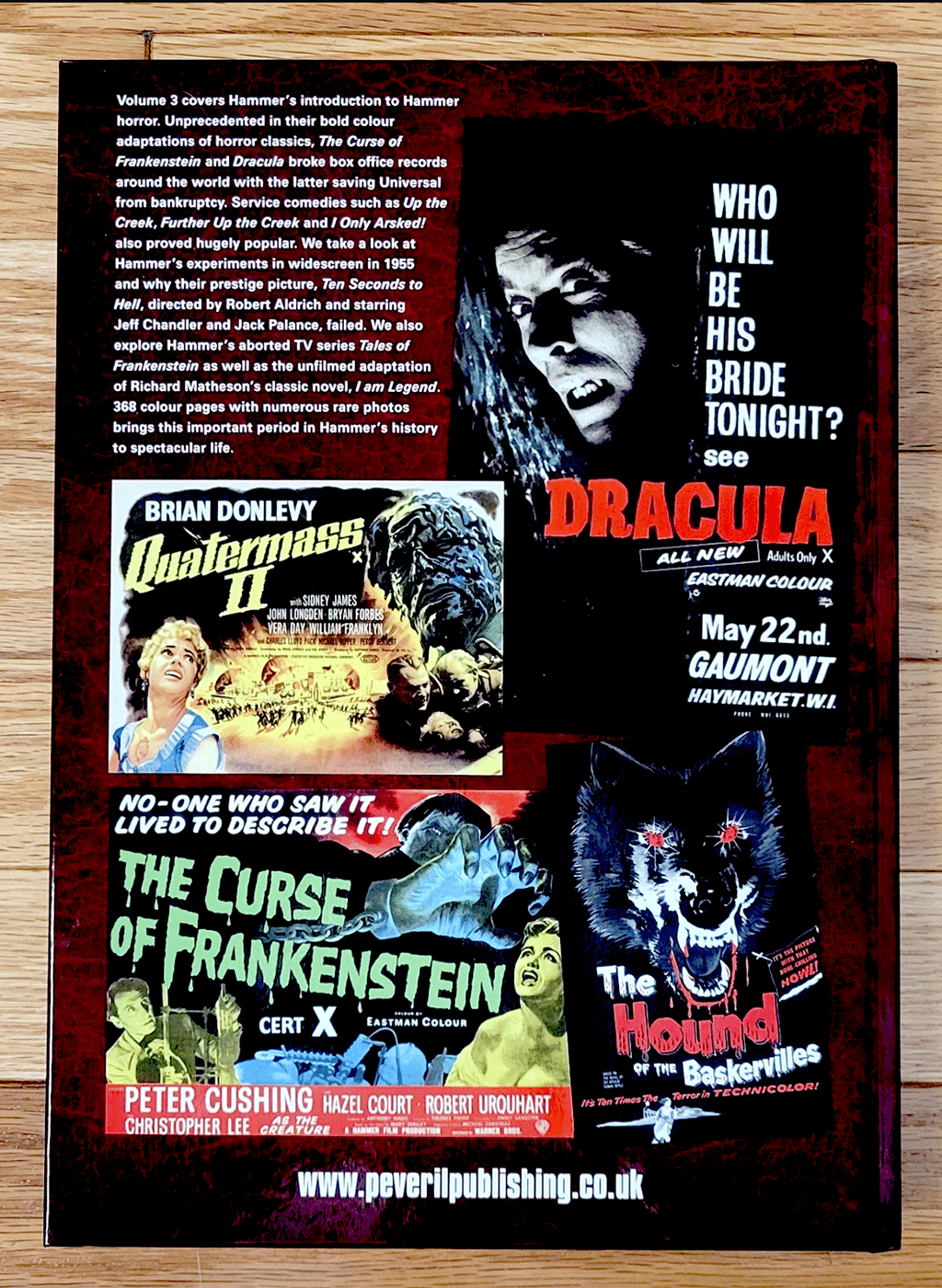
Upon receiving and holding my copy of Wayne Kinsey's new 368-page hardcover book from Peveril Publishing (coming soon on their website), The House that Hammer Built Vol 3: 1955-58, I did something I've never done before—I weighed it on a scale. It registered nearly three pounds. That matches the weight of the world history textbook my students use, which covers thousands of years of history. The revelation? Kinsey's book is packed with information and rare photos about four key years in the studio's history, when it revived the then-dormant horror genre and carried it through the mid-1970s. As Kinsey states in his introduction, "Welcome to volume 3 of my ultimate history of Hammer from 1934-1979," and the book certainly lives up to that statement and then some.
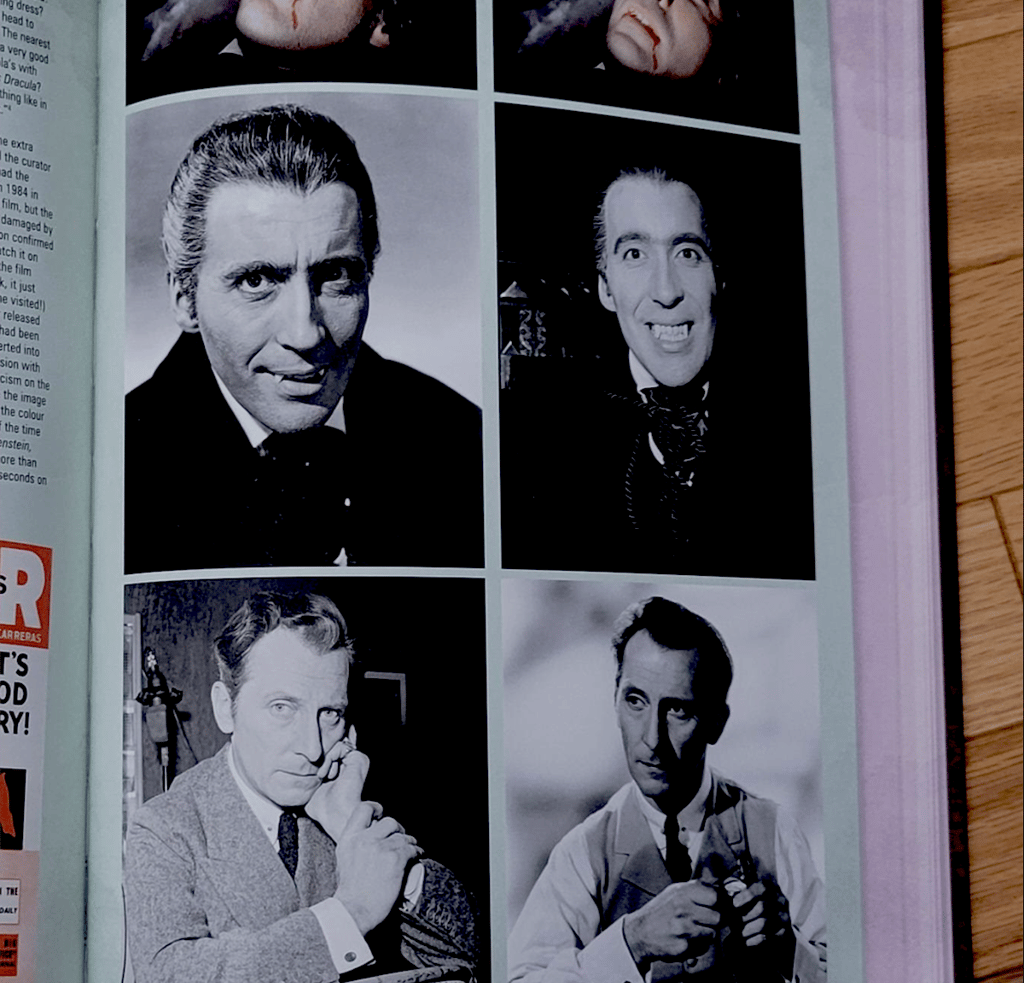
The years are conveniently separated by color-coded pages, making it easier to navigate to films from a specific year. This four-year span included many of Hammer's classic films—such as X: The Unknown, Quatermass 2, The Curse of Frankenstein, The Abominable Snowman, Dracula, The Revenge of Frankenstein, and The Hound of the Baskervilles. It also features the studio's lesser-known titles and featurettes, such as Women Without Men, The Steel Bayonet, Up the Creek, and Ten Seconds to Hell. I learned a lot about some non-horror Hammer films I hadn’t seen before, especially from 1955, and I tracked down A Man on the Beach shortly after reading about it, as it quite intrigued me. I also particularly enjoyed seeing the historic coaches from various Hammer films, including an 1840 Royal Mail Coach, an 1860 Hears, and a 1790 Traveling Chariot, among others.
The wealth of material and depth Kinsey explores in each film is impressive, covering production design, locations, and script changes, along with plenty of fantastic photos from each movie. I'm a big fan of behind-the-scenes images, and there are many throughout the book. It includes numerous interviews with both the behind-the-scenes and on-screen talent who share their experiences working for Hammer Films—including Michael Carreras, Val Guest, Tony Hinds, Lens Harris, Jimmy Sangster, Peter Cushing, Christopher Lee, and Terence Fisher. There's also fascinating insight into Black Park and the opening of Bray Studios.
One of my favorite parts of the book was the section on Unfilmed Hammer: The Night Creatures (not the English-titled swashbuckler Captain Clegg, but author Richard Matheson's script for Hammer, adapted from his book, I Am Legend). Matheson's book is a true classic of the genre, and I loved it as well as the low-budget film adaptation starring Vincent Price, but I wish Hammer had filmed the production from the author's script. Unfortunately, the script (which included several pages on display) ran afoul of the censors, leading Hammer to drop the project.
Even the rare Hammer TV production of Tales of Frankenstein, which marked the union of Hammer and Universal, with Anton Diffring taking the role of Baron Frankenstein. Plus, there is background on Diffring’s contract for the film.
For fans of Peter Cushing like me, there's plenty to enjoy—covering some of his most famous movies along with rare photos and interviews.
This is a limited-edition book with 750 copies available for fans. I highly recommend it for Hammer Films enthusiasts, and it’s a book you'll want to revisit repeatedly — even if you think you know everything about the studio, you’ll definitely discover new information in Kinsey's labor of love.
garysvehla509@gmail.com