
Phantom Lady
Based on the novel by Cornell Woolridge, this Robert Siodmak-directed film noir, his first, is built on a crackerjack script that overflows with mystery. 1 HR 27 MINS 1944 Universal
FILM NOIR/DARK CINEMA
written by Gary Svehla
10/28/202514 min read
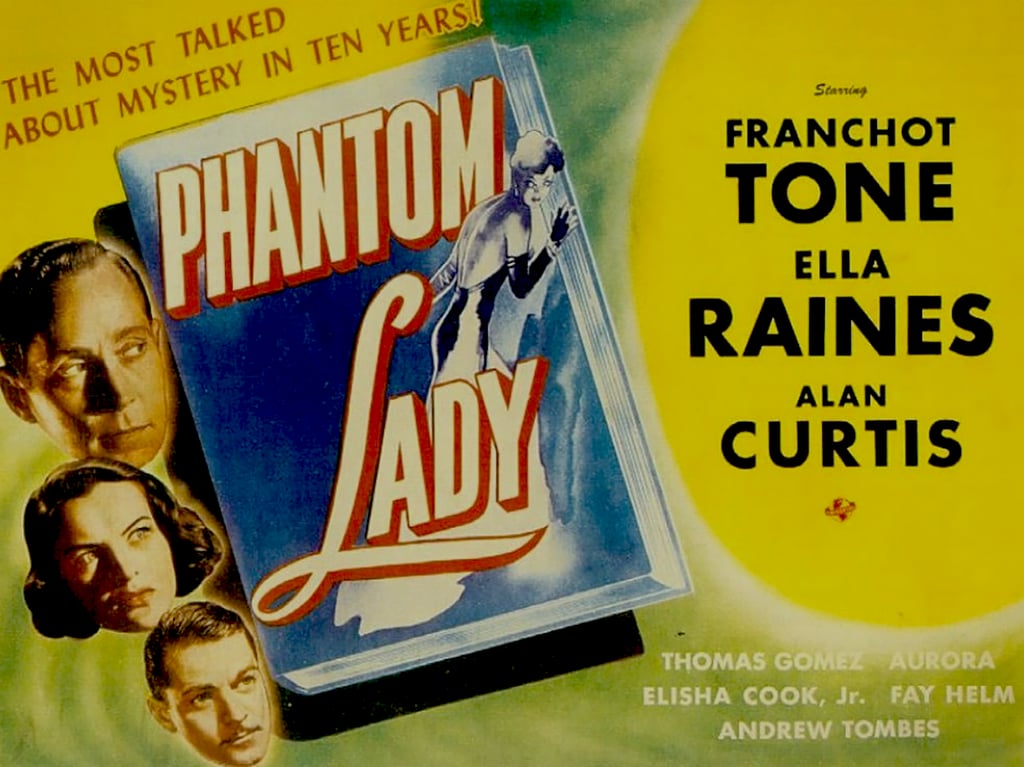
Starting with a lively musical score by Hans Salter, the music quickly slows as an emotional violin joins in, then takes on a more cheerful tone as the credits roll. Action begins by showing the back of a woman’s hat, very avant-garde, resembling a bird. The camera zooms out, revealing the woman drinking in a bar and rising to play the jukebox. A mustached man enters, asking for a double scotch. The woman, forlorn, returns to her seat and sits next to the man. He offers her two tickets to a show tonight, explaining he was stood up. The woman, lost in her thoughts, quietly says, "No, thank you.” Then the man asks, "Would you like to go with me?” and the woman simply walks over to the jukebox, staring into space. When the man asks again, the woman accepts. As the man begins to give her his name, she calmly interrupts, saying, “No names, no addresses … we’re companions for the evening. That’s the only condition I’ll agree to!” While being driven to the show, the man tries to start a conversation, but the woman responds briefly and with a blank expression. The woman, clearly under stress, says, “I'd like to laugh; it would be fun to laugh.”
The cab pulls up to The Casino featuring the “Chica-Boom-Boom Musical Revue starring Estela Monteiro.” Inside, music plays as people settle into their theater seats. Cliff (Elisha Cook, Jr.) drums loudly, adding to the lively sound. Cliff seems to recognize the mystery woman, smiling and winking at her. Then the stage fills with stunning female dancers as the main performer, Estela Monteiro (Aurora), steps out. Monteiro is wearing the same hat as the woman in the audience. The man says, “Look at her face. She could murder you.” After finishing her song and receiving loud applause, the woman is upset to see her hat worn by someone in the crowd. The man guides her back to the bar, and they share a brief farewell before parting ways. He asks for her name, but he says, “No, it’s better this way.”
Returning home, we discover the man’s name is Scott Henderson from the label on his apartment door: “Mr. and Mrs. Scott Henderson.” Entering a pitch-dark environment, Scott calls out his wife Marcella’s name. When he turns on the light, he is confronted by three male strangers who keep him out of the bedroom when he asks about his wife. Ultimately, they allow him to enter the dark room to see his wife in bed beneath a sheet, completely covered. The leader of the three introduces himself as Inspector Burgess (Thomas Gomez), who wants to ask a few questions, with Henderson burying his head in his hands, shocked to find his wife dead.
The three policemen ask the standard questions. Scott last saw his wife around seven o’clock, planning to take her out to dinner and a stage show, but she changed her mind … “I went alone … we argued… things haven’t been right between us for a long time … it was our anniversary.” Scott says he had friends over for drinks earlier, including coworkers and his best friend, Jack Marlow (Franchot Tone), who was headed for South America. Scott explains that, as he prepared for the big night, his wife just laughed at him. He asked his wife for a divorce, but she refused. “We were happy once, but she was too spoiled and too beautiful,” Scott adds. The men watch as her body is wheeled out of the apartment. Scott breaks down. Burgess asks where Scott was at eight o’clock, and he says he was eating in a bar with another woman he met there. “I wasn’t in a mood to be there alone,” Scott explains. Scott has nothing to say when asked who she was. Henderson’s wife was strangled with one of his ties, and the policeman noticed Scott was a very fashionable dresser, wearing a tie!
The next scene shows Scott’s office door, with “Scott Henderson, Civil Engineer.” Carol “Kansas” Richman (Ella Raines) enters her office, glancing at the mail. Kansas listens to a voice message from her boss, Scott, instructing her on what to do before he arrives at the office later. She checks the headline of a local newspaper, which reports that Mrs. Scott Henderson was found murdered in her apartment. Kansas tries to contact Scott by phone, looking out of sorts, but has no luck. She asks her secretary, Ruthie, to come into the office, fearing Ruthie might break down, but they continue dictation.
Meanwhile, at a bar and grill, Henderson is being further questioned by Inspector Burgess. Scott cannot remember the lady’s name or a clear description of her. The bartender from the previous evening enters the bar. Burgess is asked if he has ever seen this man before, and he replies, “A face is a face.” Burgess tells him to take a closer look. Suddenly, he recognizes the man, but he does not remember the lady with the crazy hat. Or at least he claims he does not remember. When tracking down the taxi driver who took them to the theater, the driver testifies that the man was alone.
Next, they go backstage to see Estela Monteiro, where Burgess asks if this man was accompanied by a woman wearing the same hat as you did last night, and she vehemently denies it. As the duo leaves the backstage area, Burgess asks why he won’t admit he had no woman with him last night. Henderson again explains what they did together last night. Burgess tells Scott he’ll need sleep and a good lawyer.
Next, in a hot courtroom, the trial of Scott Henderson begins, with the prosecution arguing there is no evidence of another woman. The trial continues through a few brief scenes, and Scott is eventually found guilty, with Kansas watching from the audience. Later, visiting Scott in prison, Kansas appears to take a personal interest in the case. Unable to speak, Kansas asks if there is anything she can do for him. Scott states that his defense did everything possible, and he doesn’t want her wasting time on a case that’s going nowhere. “Stop blowing bubbles, Kansas,” Scott demands. Kansas insists that somebody must keep searching for the mystery woman, while Scott starts to doubt whether such a woman ever existed.
Kansas visits the spot where the entire incident with Scott happened. She orders a drink from the same bartender who saw everything but now denies it. Instead of enjoying her drink, Kansas sits and stares at the bartender. As the crowd grows larger, she continues to sit and stare. Seeming guilty, the bartender spills his liquor bottle. Late at night, rain falling, Kansas sits alone with two lingering customers, her penetrating eyes burning holes in the bartender. She has been returning to the bar for several days, and the bartender is closing up and walking down the street towards his home. Soon, the bartender encounters the woman. As she reads the newspaper, Kansas walks past him, then follows him all the way to a subway station, waiting for a subway to his apartment. Seeing Kansas waiting alone for a subway, he waits a few feet behind her, eyes downcast. When the subway arrives, he considers pushing her into the tracks, but another woman arrives, and he slowly walks away. Still following him, the bartender becomes more unnerved. When Kansas reaches a neighborhood with people sitting on the steps in the dark, the bartender confronts her as two men gather around. Fearful, the bartender accidentally reveals that someone bribed him. As citizens from the block grab him, he runs into the street and is hit by another car and killed.
Wearily arriving home, Kansas finds Inspector Burgess waiting for her in her apartment. Burgess asks if Kansas has found a new job yet and suggests she return to Kansas, which she refuses. Finally, he gets to the point and asks why she was following the bartender. Kansas, shouting, exclaims, “I don’t have to tell you anything! But he hasn’t got anybody else to fight for him. He has no money, no friends … I had to do something. I know, Inspector, that Scott is innocent.” Burgess shockingly replies, “So do I.” Kansas curiously asks, “What do you mean?” Burgess explains, “I will say I did my job fully. The evidence shoved him right into the chair. But since the trial, I’ve been doing a lot of thinking. The only defense Scott offered was to continually talk about a woman with a funny hat … only a fool or an innocent man would have stuck to that alibi. A guilty man would have been smarter. Scott wasn’t being smart; he was telling the truth.” Burgess wants to help Kansas unofficially. She smiles and shakes his hand.
Kansas returns to The Casino, dressing provocatively and catching the eye of drummer Cliff again. Cliff invites her to the stage entrance, where he enthusiastically greets her. He then takes her to a small jazz club—really a tiny room where musicians are jamming and blowing a hot tune. Cliff gets behind the drums and plays an up-tempo beat, smiling at Kansas. As the music builds to a climax, Cliff gradually gets swept into a sexual hysteria, while Kansas stands and grinds, egging him on. When they reach a musical crescendo, he stops playing and escorts Kansas out of the jam session. He then invites her to his apartment, talking about making her look classy. He claims he’ll get the right hat to make her appear upper-class, insisting he’s an authority on hats. “I get paid knowing about hats,” Cliff declares. In a moment of passion, he says a man paid him $500 to say, “There was no dame. No matter who asks you, keep on saying no.” Cliff then drops a police letter with Kansas’s name on it, identifying Cliff as being wanted by the New York Police Department. Realizing he’s being used and that someone is after him, Cliff begins to shove her around his darkened apartment. Kansas breaks free, runs out of the building, crosses the street, and enters a small store to use their phone. There, she calls Burgess for help.
A man enters Cliff’s apartment and says, “I can feel the rats on the wall … that’s an exciting girl you picked.” Cliff stands completely terrified, wondering what’s happening. The man explains she would have humiliated herself to get you to talk, and Cliff’s eyes bulge. Cliff insists he did not tell her anything, and the man responds, “Why lie?” Cliff offers the man his $500 back. The man says, “A pair of hands can do inconceivable good, yet the same pair of hands can do inconceivable evil. They can destroy, torture, or even kill. I wish I didn’t have to use my hands to hurt another human being,” and the man slowly unwraps his scarf from his overcoat.
Cutting back to the small delicatessen where Burgess is pulling up in a car, Kansas and Burgess explore Cliff’s apartment together. There, they find Cliff’s body with a scarf next to it. Kansas returns to the prison to see Scott Henderson. Scott says his appeal has been denied, and he has 18 days left. He still feels it’s a waste of Kansas’ time to come here. He feels lost. Scott thinks Kansas should be having fun with other guys, but she admits she’s in love with her boss. Just as Kansas is leaving, Jack Marlowe comes to visit him, but unknown to everyone, he is the man who murdered Cliff with his scarf.
Jack is serving a drink to Kansas in his art studio, visibly shocked while first reading about Scott’s case 6,000 miles away in South America. Kansas shares her feelings for Scott and explains how the murderer would kill witnesses, like Monteiro, if he ever found them. Kansas is forlorn, feeling that just when she's getting close, someone manages to get there first.
Tonight is the farewell party for the closing show at The Casino, and the entire cast and crew are celebrating backstage. Burgess has no luck getting Monteiro to admit she saw a woman wearing the same hat as her. Jack and Kansas look downright depressed. Burgess talks to Jack about the criminal mind, which leaves Jack with a headache and then a fainting spell in the dressing room. He soon collapses trying to stand, telling Burgess not to tell Kansas. Soon, another policeman enters, telling the Inspector he must take an immediate train to Philadelphia for a hot case. He tells Kansas he’ll try to be back by tomorrow afternoon. As Kansas learns Montiero took an earlier flight, she sees stagehands moving out her wardrobe, including a hatbox with the designer’s name, Kettisha.
While reviewing sketches of hats designed by Kettisha, she notices the hat Montiero wears in her show. Madame Kettisha calls for a specific designer, but the girl refuses to speak. A few moments later, the designer reappears and reveals that information about the hat could save a man’s life, according to Kansas. She confesses to copying the hat for a regular customer and earning $50. Madame Kettisha is outraged by the girl’s actions, as she is making a copy for Ann Terry, a customer. Jack and Kansas then head straight to her address. When they arrive, they are greeted by a matronly woman who is part of the team caring for Miss Terry, who went into a mental health crisis last spring after her fiancé died. Kansas is nearly overwhelmed by more bad news and says she must see Miss Terry.
The caretaker allows Kansas to see Ann Terry alone in a room, where she sits in a chair, appearing generally unresponsive. Ann talks about her grandmother marrying the man she loved, but she says she will never marry. She lovingly speaks of her late fiancé, but suddenly, she announces she no longer wants to talk and slumps back into her chair, lost in her own thoughts. Kansas gradually leaves the room, quietly sobbing. Then, she decides to reenter and finds Ann on the floor examining a Kettisha hat box and hat. When Ann notices that Kansas is back, she recoils in fear, hiding the hat behind her. Kansas asks Ann to kindly lend her the hat, which Ann promises to return. Ann says that since she is wearing it for the man she loves, she can borrow it. Soon, Ann breaks down, saying she doesn’t want the hat, crying hysterically that he’s dead. Kansas leaves with the hat.
Driving down the country highway, Kansas sleeps peacefully on Jack’s shoulder. When she wakes up, she’s excited to call Burgess and share the good news. Of course, such news gives Jack headaches and eye twitches. Stopping at a roadside shop, Kansas wants to call Burgess, but Jack volunteers to make the call instead. However, he only pretends to dial. Jack tells Kansas that he instructed the policeman to tell Burgess to come over for drinks. Thinking she needs rest before Burgess arrives, she opens the bureau drawer and finds the police department letter about Cliff and the black purse with the big letter “J” next to it. Her expression changes as she realizes she’s in danger. Kansas tries to call the police, but Jack, knocking on her bedroom door, interrupts her. She quickly hangs up. When she opens the door, Jack is on the bed, beckoning her. But she notices the hat is no longer on the statue where she placed it. Jack claims his head is hurting and slips off his tie, asking Kansas to turn off the light. Then he goes on a rant, calling people like Scott stupid, kind, and dime-a-dozen. Kansas tries to run out the front door, but it’s locked. Jack talks about murders and bribery. Kansas asks why he would frame Scott, and Jack talks about Scott’s inferior, mediocre life compared to his. He says, “What’s any life compared to mine?”
Jack describes committing the murder of Scott’s wife. “She was sitting at her dressing table just as you’re sitting there. Only she wasn’t frightened like you are. Marcella was never scared,” he said. “She told me I’d better hurry ... the boat leaves in an hour. Then she told me she had no intention of going. She was just amusing herself. I never let myself love anyone before ... it might get in the way of my work ... she kept laughing at me, she wouldn’t stop. I had to make her stop laughing!” Kansas screams in anger. That’s when I knew they’d arrest me. I couldn’t let them do that. When you’re born with my gift, you can’t let them stand in your way. I followed Scott; I saw him with that woman. And she slipped away from me, and I had to bribe the others. They think I took the boat that night, but I didn’t. I went aboard, sure, but I left before it sailed.” Jack later caught the boat at a different location. Kansas reacts fearfully, “Scott, how could you?” The madman says, “I’m fond of Scott, we’re friends, but what’s his life compared to mine? An average engineer working in sewers, drain pipes, and faucets. What’s any life compared to mine!”
Continuing, Jack says, “I asked you not to interfere, but you wouldn’t listen. It will be so easy. No one will question me.” The phone rings. “They’ll say it is just another suicide.” Jack pulls the necktie between both hands and slowly advances. Kansas screams out, “After me, there’d be others. And you’ll go on killing until they catch you. I won’t be the last; there’ll be others after me. You can’t help yourself because you’re mad, mad, mad!” Kansas finally answers the long, ringing phone and finds nobody there, and she cowers in fear as Jack approaches her, backing her against the balcony. The doorbell buzzes, and Burgess enters, Kansas running to him, as we hear the sounds of Jack jumping off the balcony. Burgess runs to investigate and only sees broken window glass.
Later, Kansas goes into Scott’s new office to greet Scott and Burgess. Scott has to hurry to a chemical plant, whose appointment might take all day. Scott tells Kansas he’d left instructions on the Dictaphone, which generally state he wishes to marry her, as she smiles widely, and the end credits appear.
The director, Robert Siodmak, brother of Curt, found success in a series of film noirs in the 1940s. After directing the eccentric Son of Dracula for Universal —a wild blend of horror and film noir in 1943 —Siodmak abandoned horror for thrillers and noir, beginning in 1944 with Universal’s Phantom Lady. Other popular noirs he directed included The Suspect, The Spiral Staircase, The Killers, The Dark Mirror, Time Out of Mind, Cry of the City, Criss Cross, The File on Thelma Todd, and The Devil Strikes at Night, among many others. Siodmak died from a heart attack, almost forgotten and alone, two months after his wife died.
The screenplay was based on the novel by Cornell Woolrich, one of the primary authors of film noir and mystery (he also wrote under the pen names William Irish or George Hopley). Cornell Woolrich-based noirs include some of the best of the genre. Movies based on his short stories, original screenplays, and novels include The Leopard Man, Phantom Lady, The Mark of the Whisler, Deadline at Dawn, Black Angel, The Chase, Fear in the Night, The Return of the Whisler, Night Has a Thousand Eyes, The Window, Suspense, If I Die Before I Wake, Rear Window, Nightmare, The Boy Cried Murder, and many television shows and movies.
Phantom Lady features an effective scenario that keeps audiences guessing until Franchot Tone reveals himself as the murderer. The mysterious woman in the bar with the eccentric hat remains unnamed, but the hat’s history is compelling. We have another innocent man framed for a murder he did not commit, and a psychopath who has one too many blackouts and fainting spells to be totally believable. Franchot Tone likes to fondle neckties just a little too long. Ella Raines, as the woman secretly in love with her boss who dedicates her life to clearing him of the murder, is perky and enthusiastic in her portrayal and probably turns in the most effective performance, though Ann Helm's supporting performance as Ann Terry comes close.
The damsel-in-distress concept has seldom been better used, and the Kansas character is most effective as both the hunter and the hunted, showing both bravado and fear in equal measure. Alan Curtis’ character, Scott, is portrayed as a total idiot, not realizing that Kansas loves him until the very end, when he decides to do something about it. Thomas Gomez plays the seemingly stereotypical Police Inspector until the cop, who does not believe Scott’s story, ultimately changes his stubborn mind and believes him because his alibi is stupid and a smart man would not cling to it for so long. Finally, Elisha Cook, Jr. deserves credit for playing a drum solo (though he wasn’t actually playing the drums) so sexual and orgasmic that the entire audience needed a cigarette afterwards.
Phantom Lady is a glorified B picture with an A star, Franchot Tone, who receives top billing for a relatively brief onscreen performance, but plays the killer as too mechanical, stiff, and self-conscious. The plot is structured quite creatively and keeps the audience guessing. Boasting effective performances and superior cinematography by Woody Bredell, Phantom Lady has a puzzle plot that still holds up today and is very much worth revisiting its intricate construction again and again.
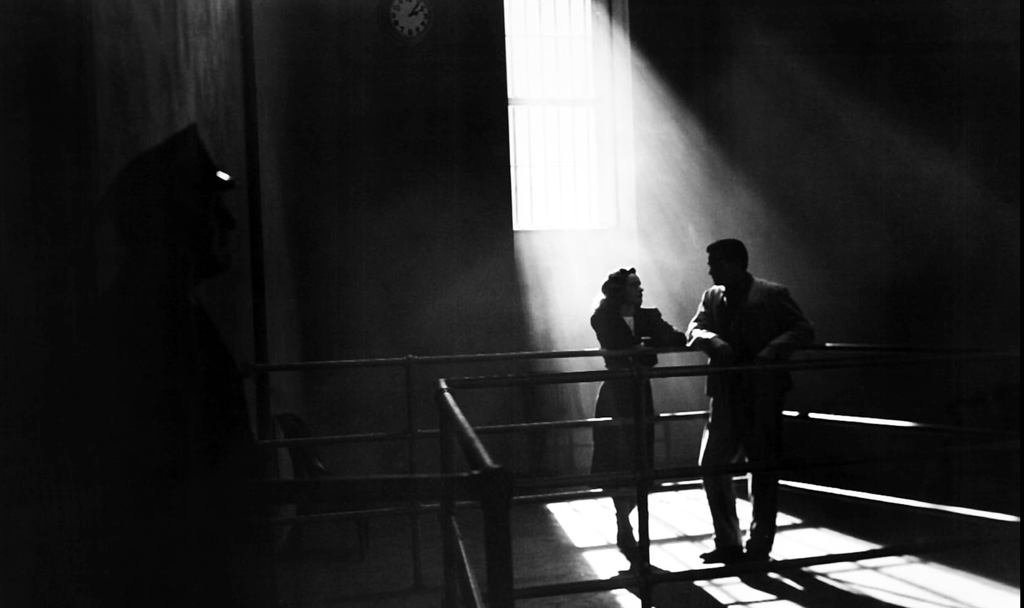
IN AN INCREDIBLE NOIRISH SHOT, KANSAS VISITS HER BOSS SCOTT IN PRISON.
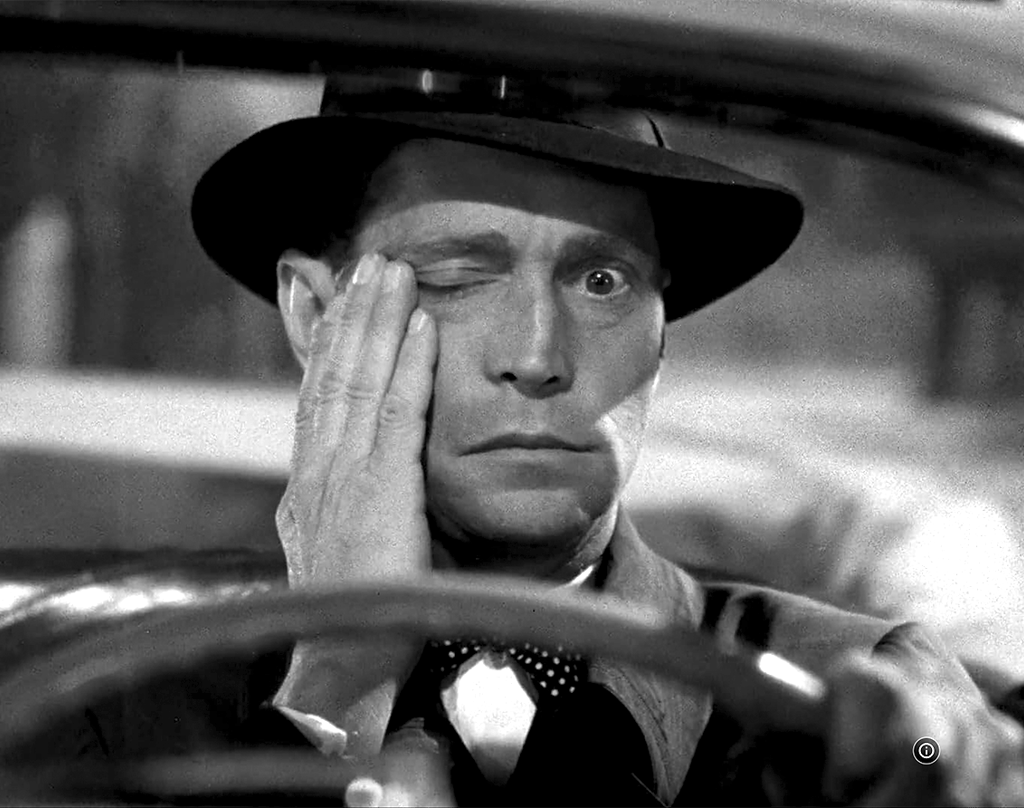
JACK (FRANCHOT TONE) HAS ANOTHER OF HIS TWITCHES AS THE KILLER, OVER-PLAYING THE PSYCHO DRAMA
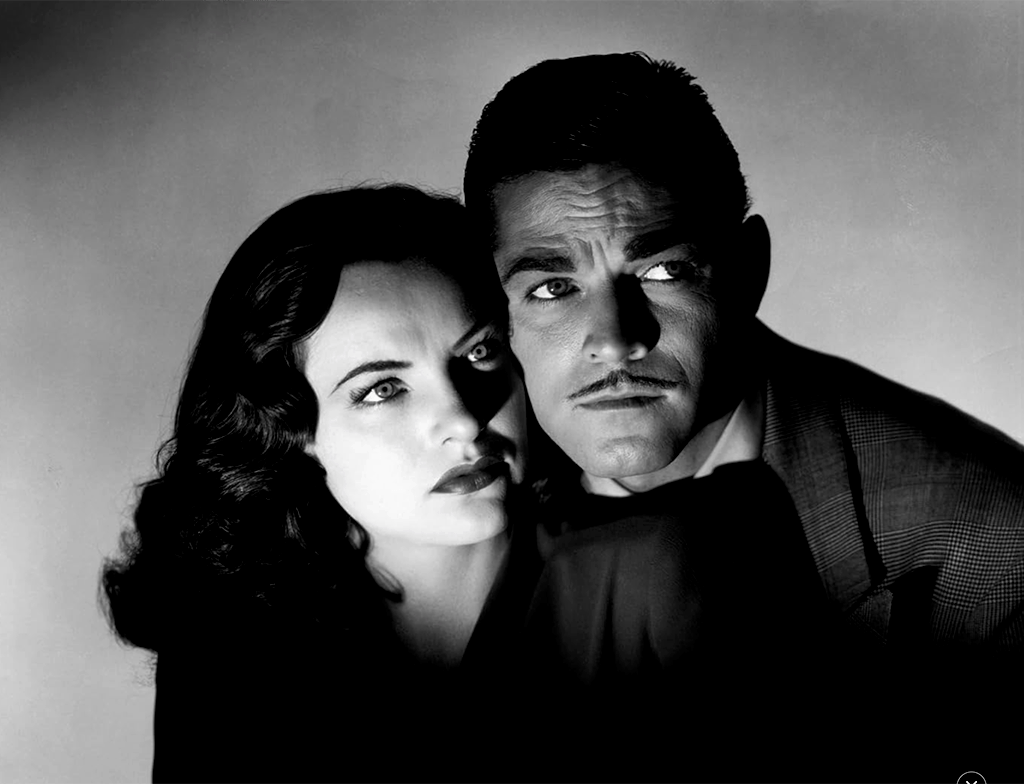
A MOODY SHOT OF KANSAS (ELLA RAINES) AND SCOTT HENDERSON (ALAN CURTIS)
garysvehla509@gmail.com