
Bloody Horror March
Ralph Kirchoff continues in his quest to uncover the best modern horror films.
HORROR/SCIENCE FICTION
written by Ralph Kirchoff
3/2/20267 min read
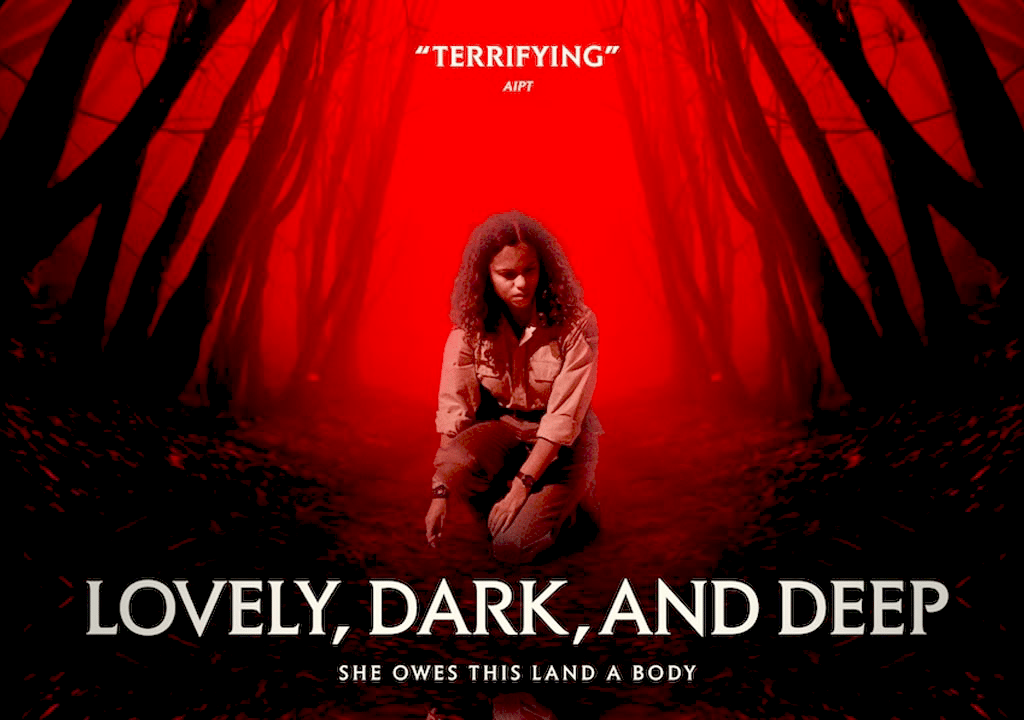
Lovely, Dark, and Deep
Gorgeous photography, fine acting, original idea, fearful, 3.5 stars. 1HR 27MIN Woodhead Creative, 2023
“… and miles to go before I sleep.”
Ever been camping? Growing up, writer/director Teresa Sutherland went camping. More recently, while trying to “creep herself out,” she drove down the YouTube rabbit hole and discovered many stories about people going missing in national parks, which sparked her interest as a storyteller. Crafting a tale of terror, she aimed to make nature feel unsafe, exposing both its beauty and its isolation.
Atmospheric and involving, Sutherland’s resulting film, Lovely, Dark, and Deep, may stay with the viewer just as its protagonist is haunted. I’ll summarize the plot and discuss some of the film’s qualities.
A poem by John Muir about losing one’s mind and finding the soul opens the film with woodland sounds. Blindingly crisp camera work slowly zooms in on old Ranger Varney’s preparations at a tree-studded campsite. Walkie-talkie conversations between rangers are heard. Varney leaves an ominous note on his station hut placard, “I owe this land one body.” Is Varney fixing to do himself in?
Now we have fantastic aerial shots of forested hilltops and mountains. One of the strengths of this film is its great panoramic feel, positively mystical. Droning cellos play over mountain shadows and small petrified boulders that look like skeletal remains. Is this nature’s dark way with humanity? The title rolls by, white letters on a black background.
New ranger Lennon (Georgina Campbell) drives in by night. She’s biting her nails nervously. What does she fear? Is it something from her past? Sutherland uses psychological props to create anxiety; a deer in the roadway, is it real or imagined? Lennon’s wide-eyed, gaping expression doesn’t resolve the question.
When Lennon meets her fellow rangers, they’re distant, even sarcastic. But Lennon is distracted. She bites her nails during a ranger meeting; her attention is elsewhere. Something from the past has driven her here. Her mission is a fearful investigation.
Sutherland’s camera focuses on a missing-person flyer: Ranger Varney has disappeared. A chance encounter with an older couple reveals that Lennon has been in this park before. She tells them she’s returned and now has a job in the back country. Do the hints add up to Lennon returning here to determine what happened in the past to a missing person, maybe a family member?
She is coptered into her resident tent station, Varney’s old station. Scenes of simple cleaning and moving preparations follow, with a lingering shot of a ranger-issued handgun. Now settled, Lennon studies backcountry maps, and we see a missing-person flyer for Jenny Lennon, Lennon’s long-lost sister, encased in plastic.
Wild animal sounds and flocking birds accompany Lennon the next morning as she performs ranger duties, but she’s also trekking deep into the forest’s uncharted zones … investigating. A sound montage informs us of the phenomenon of people, mostly children, who go missing in national parks, and (fictional) Arvores Park, where Lennon is working, has the largest number. Sound bites strongly suggest that, given the unusual circumstances surrounding the disappearances, rangers must know what is happening. Are they afraid to say what they know?
While eating dinner with a fellow ranger by a mountain stream, Lennon divulges, “Rumors about ‘her’ mental state aren’t true. ‘She’ is fine.” Sutherland’s glorious overhead tracking photography of the forest and growth is richly colorful. Lennon heads out later to continue her journey of discovery. The score is noteworthy, with somber, monotonal yet rising strings set to Lennon’s swirling memories of her sister’s excited voice in the woodlands.
I’ve detailed the first quarter of the film. Of course, Lennon will learn the ultra-menacing secrets of the back country, but at what cost to her mind, her body, her soul?
This is a wonderful little film, brief yet profoundly unsettling. Rather than blood on the rampage, the terror is more conceptual. Sutherland’s script ideas are surprising; the directing and sound design are stunning, and the acting is remarkable. Campbell is an appealing actress, and it’s easy to sense her confusion, annoyance, and fear: a pleasure to watch her perform. As yet, we haven’t screened Lovely, Dark, and Deep at our biweekly Bloody Horror Friday Club. I give it 3.5 out of 5 stars.
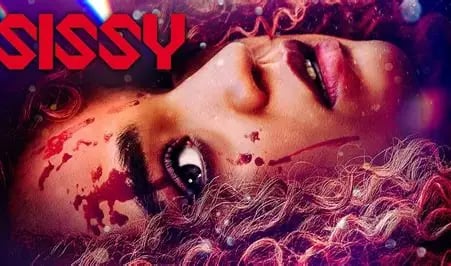
Sissy
Well-produced Psycho-ish character study with an innovative twist, colorful setting, rangy acting, expert directing, bloody effects, 3.5 stars. 1HR 42MIN DEMS Entertainment, 2022
In a curieux.com interview, Australian writer, director, and actress Hannah Barlow explained the inspiration behind her entertaining and bloody horror film Sissy, “… the inspiration came from a personal place. The film is about bullying and core traumas, and how they manifest in your life as an adult …” Co-director Kane Senes added that they wanted to make a film where the viewer identifies with “… the antagonist as protagonist. We’re no longer in this era where slasher killers like Freddy Krueger come through and hunt us, as helpless victims.” He suggested that in this new age of anti-victimization, we become the villain: “We are our own worst enemies now.” The resulting effort, Sissy, is slick and a lot of fun. I’ll describe the plot and some of its qualities.
Production credits appear over a dirgelike harpsichord accompaniment. Death seems to be in the offing. Home cam video documents two young girls, Sissy and Emma, playing and frolicking for the camera. They are best friends.
Roll forward 10 or 15 years, and Sissy (Aisha Dee) is now an internet influencer. Accompanied by clarinets and strings, she’s making her latest video, which includes self-emotion-healing tips using small household props and quick breathing exercises. She doesn’t forget to hawk her sponsor's skincare product. Then, via alternate identities, she sends supportive messages to her primary account to promote her channel. Barlow and Senes present their character Sissy as not to be taken seriously. Are we in for a black comedy?
This opening continues, and we see that Sissy lives modestly in a small, unkempt flat. She experiences a female issue and heads to the drugstore. There, she runs into Emma (Barlow), whom she hasn’t seen since childhood. The accidental meeting is awkward. Emma gushes over seeing Sissy again, but Sissy is reticent. She doesn’t like being called Sissy. She wants to be called Cecilia. Emma implores Sissy to come to her engagement party, and Sissy reluctantly agrees. Barlow’s camera captures both women in extreme close-up. Emma’s eyes are wide, as if, even after not seeing each other for many years, she feels an instant closeness.
Sissy sits alone in her yellow compact car in the rain. What happened in the past that makes her feel this way—hesitant? But happier thoughts come to mind, and she smiles, looking forward to being with Emma at the party.
At the karaoke party, we learn that Emma’s fiancé is a woman. The partygoers are all supportive and possibly homosexual as well. Emma and Sissy’s rapport is further strengthened, and Sissy is invited to Emma’s “Hen’s Weekend. “Emma insists, “… be there or die,” and high-pitched oboes portend the ominous.
And here it starts. Way back in childhood, after Sissy, Emma developed a new best friend, Alexia. As the film reveals in piecemeal, and I won’t divulge significant details, Alex bullied Sissy. An incident occurred; Alex was injured, and she blamed Sissy. Alex, still in Emma’s circle, will be there at the Hen’s Weekend. Sissy has real dread about being in attendance with Alex. On the way to the Hen’s Weekend destination, a dead dog that a fly has eaten on the roadside juxtaposes the partygoers’ frivolity.
As the partygoers arrive at their weekend destination, memories of the past catch up with Sissy, leaving her affected. Her slightly morose mood quickly makes her an outcast among the fun-loving merrymakers enjoying the ribald goings-on. Alex openly repels her. The mood twists. The camera work slides and zooms. The music is now strident, Psycho-esque. The discomforting atmosphere among the group intensifies. Alex antagonizes. Sissy reacts defensively, and the ensuing violence is inventive, logical, and impactful … astonishing.
As yet, we haven’t screened Sissy at our biweekly Bloody Horror Friday Club. I give it 3.5 out of 5 stars.
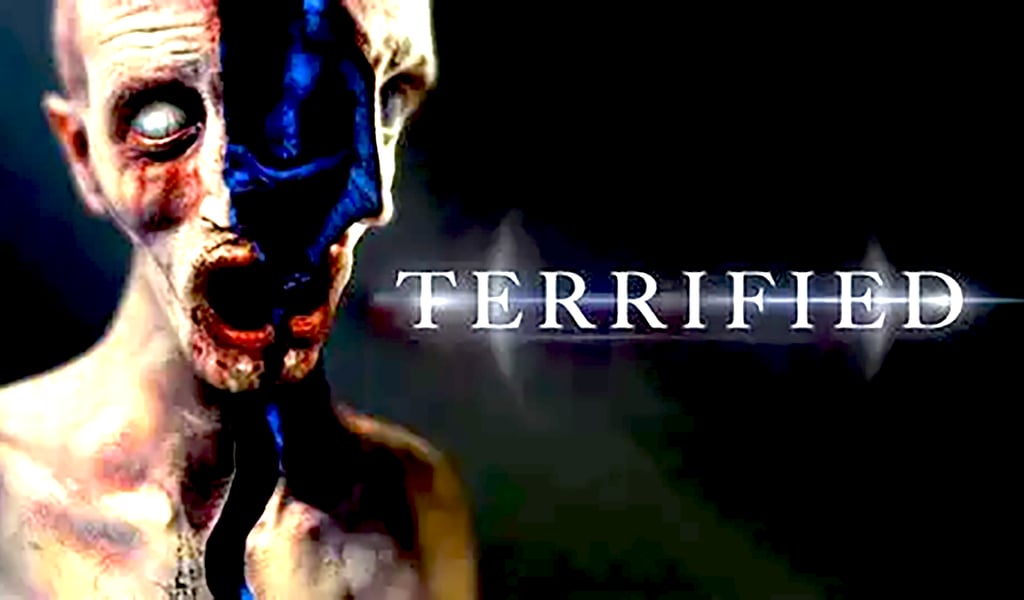
Terrified
Demián Rugna’s tale of the paranormal, more complex than When Evil Lurks, gripping narrative, gruesome effects, 4 stars, 1HR 27MIN, Aura Films, 2017
While living in rural Argentina, Demián Rugna imagined secret horrors in its remote areas. He noted the cancerous conditions of plantation workers, diseases caused by the use of poisonous pesticides. And he imagined a supernatural manifestation of that horror, horror that could spread like an infection. Springing from these ideas, Rugna developed a screenplay about paranormal possession that spreads through community waterworks. And with Terrified and the realization of that story, Rugna directs a fright fest of which horror fans could ask for little more.
Describing the beginning, the camera slowly pans toward Clara at her kitchen sink. She puts her ear to the drain. Does she hear something? Rugna’s unnerving point-of-view camera angle is from inside the drain, looking toward Clara. She quickly tries to wash whatever was unnatural down. Her husband, Juan, enters. He’s excited that the dog he accidentally ran over and thought dead the day before is alive! By low monotone strings, Clara tells Juan that she heard voices in the kitchen, as if it were a continuing experience; their faces are drawn with fear. He asks what the voices said, and she replies, “… that they are going to kill me.” The red typeface title, Aterrados (Terrified) appears.
There is difficulty sleeping that night. Restless, Clara shambles into the bathroom. Juan hears banging. He starts knocking on walls, telling his neighbor Walter to “stop trying to fix things, stop banging, it’s late, people are trying to sleep.” The banging continues. Annoyed, Juan rises from bed, marches out to the front of Walter’s house, tries the intercom, and yells at Walter to stop banging on the walls. As he walks back into his house, Juan still hears banging, closer this time, and says to himself, “That’s not Walter.” Asking Clara through the bathroom door, “Is that you banging?” he enters the bathroom, and … you’ll have to watch the movie.
Now we have 3 paranormal investigators. They’re asking questions about recent horrific murders and pointing out similarities to those that are decades old. They learn about the dog that appears to be alive after having been run over and killed. And they learn about Walter, who was remodeling his house at odd times of the day.
Walter has been trying to engage a paranormal doctor about occurrences in his house. He senses something under his bed. His bathroom drain seems unnatural. His heavy bed moves on its own, scraping across the floor. We, not he, see what appears to be an entity moving through his house. He covers himself and prays while elongated hands torment him.
All of the above take place in the first 15 minutes of the film. The story grows more complex with flashbacks, murderous entities, animated corpses, secret and torturous affairs among neighbors, and investigators who perhaps come too close to what they seek. And in Rugna fashion (see When Evil Lurks), it is suggested that the horror is more expansive than the isolated sets shown.
Rugna’s horror effects are bloody, the concepts are innovative, and the musical accompaniment evokes the demented with twisting strings, pounding drums, and screeching. The cinematography doesn’t call attention to itself. The colors are rich, and this feels like a typical suburban neighborhood, yet supernatural evil looms.
This is a must-watch for horror fans. We gave it 4 out of 5 stars at our biweekly Bloody Horror Friday screenings.
garysvehla509@gmail.com