
Bloody Horror July
The July edition of Bloody Horror documents stabs in the back, Nazis, and telephones that transcend time.
written by Ralph Kirchoff
7/6/20269 min read
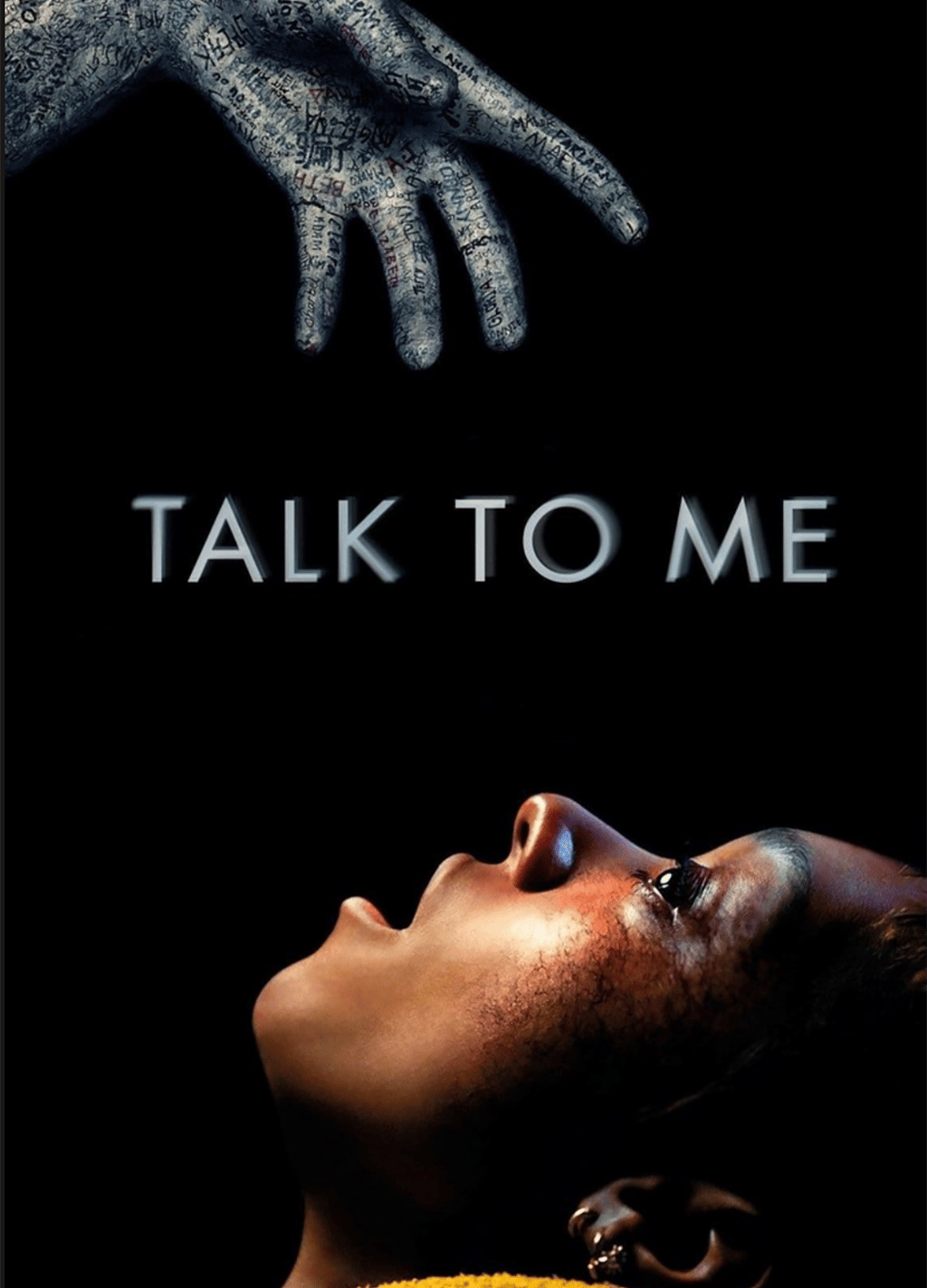
Talk to Me
Ghostly possession romp, terrific script, fine effects and acting, 3.5 stars 1HR 35MIN Causeway Films, 2022
In the 20-teens, young Australian filmmakers Danny and Michael Philippou made comedy-horror videos loaded with dangerous stunts and fake blood for their YouTube channel, RackaRacka. In 2020, they received funding from Screen Australia to create a feature film. According to a Screen Daily article, Danny had suffered “a severe accident … at age 16 where the sensation of someone holding his hand brought him out of shock.” Inspired by this experience, he crafted a script and, with his brother Michael, directed their feature debut, the thrilling supernatural horror film Talk to Me. I’ll detail the film’s setting and highlight some of its qualities.
Metal-beat synths and rap vocals accompany young adult partygoers. One man aggressively seeks out his brother, Duckett. He pounds on, then breaks down, a bedroom door in the house. Shirtless Duckett is in the room. His brother covers him and starts walking him out of the house, out of the frivolity. But people have their phones out, filming the goings on. While the brother tries to strong-arm the crowd to stop filming and put their phones away, Duckett, bare-chested and bloodied, stabs his brother in the back with a big knife, then walks a few more steps to an outdoor patio and stabs himself in the forehead. Angled white capital letters on a black background appear, “TALK TO ME.”
We now shift to Mia (Sophie Wilde) sitting alone, pensive. She’s attending an annual memorial service for her deceased mother. She fidgets with her fingers, flaking off her nail polish. That evening, she gets a call from her young friend Riley (Joe Bird) and agrees to pick him up and drive him home. The two are joyous together, singing in the car, but the mood turns downward when they see a gravely injured kangaroo in the road. Mia approaches the animal with the car, but she can’t bring herself to run it over and “put it out of its misery.” Does this symbolize a potential theme in the story?
They drive to Riley’s house, where they meet Riley’s sister, Jade (Alexandra Jensen). Danny Philippou’s script uses broad strokes to make his points economically. Mia jokes about Jade’s boyfriend and touching her “Gucci.” Jade jokingly admonishes Mia not to talk about her “Gucci” in front of her young brother, Riley. These three, Mia, Jade, and Riley, are the best of friends.
That evening, the three sneak out to a rustic house party with rap music playing, brick walls with neon signs, teenagers, and beer. But there is a loose plan here. Apparently, a ceramic-coated embalmed medium’s hand, previously obtained from Duckett, is meant to be part of a kind of séance party game. Mia, wanting to shed the somberness of her mother’s memorial, volunteers to “go first.” What follows is a truly gripping possession sequence with quick shots of horror makeup, super-wide-eyed iris effects, lights, sound, and dynamic acting. The tension in the scene subsides, and later that night, we see Mia’s arm gently stroking Riley’s sleeping head, but now there is a dark, monstrous quality about her arm.
The next night, another possession party is planned. The dialogue throughout the first half of the film is breezy and fun. The banter between Jade’s mother and her children is delightful. Comic relief is necessary in most horror movies, and Philippou’s script excels at delivering it. The partygoers gather. One by one, they each have a go at ‘shaking the hand,’ and then young Riley wants a turn. Jade says no but leaves the room in protest. So Riley gets strapped in for the possession ride. His possessor is apparently Mia’s deceased mother, and I’m just going to say, well … this is a horror movie after all, and it’s a smashing good one. Viewers are in for well-realized elements of horror: Camera work, acting, ghostly effects, music, all cohesive in a fine telling of Philippou’s imaginative script. And the Philippou brothers treat us to an otherworldly and logical finale that doesn’t disappoint.
As yet, we haven’t screened Talk to Me at our biweekly Bloody Horror Friday Club. I give it 3.5 out of 5 stars.
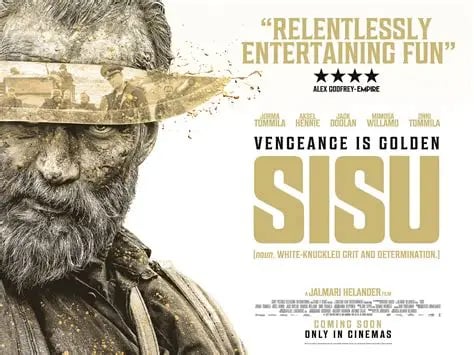
Sisu
Sparse WWII Lapland setting, inventive and bloody action, stylized cinematography, great acting, 4 stars. 1HR 31 MIN Subzero Film Entertainment, 2022
According to a Nerdtropolis interview on YouTube, Finnish writer/director Jalmari Helander was influenced by action movies like First Blood (1982) and road movies like George Miller’s Mad Max series. There is a Finnish concept of “sisu,” an unstoppable force of determination and perseverance. Helander wanted to create a character in a film that personified the concept. His idea was to make a mostly stoic, never-say-die hero who uses necessary and imaginative violence against his enemies, and to make the resulting gory spectacle the film’s art. The resulting movie, Sisu (2022), is a fantastic watch with enough carnage and bloodshed to qualify as horror. I’ll describe the film’s setting and some of its major aspects.
Gold letters on a black background spell out SISU, a Finnish word meaning “unimaginable courage and determination when all hope is lost.” Narration tells us it’s 1944, and Finland must drive the Nazis out of Lapland. The photography is stunning as Helander shows us burning maps and a radiant countryside of orange/red earth and gray rocks. The camera zooms across the richly textured land, and we come to a mountain stream. A man (Jorma Tommila), “having left the war behind him,” pans the silt for gold. His little poodle whimpers. A small gold nugget is sifted, and he hollers for joy as an intertitle appears, CHAPTER 1:GOLD.
We see the man’s possessions, a horse and bridle, a bucket and pickaxe, his little dog, and his stream-washed clothes hanging from a horizontal rope. It’s now evening, and camped by a fireside, he sees a dozen Nazi airplanes fly overhead. He continues digging for gold the next day, but is interrupted by explosions in the distance. Bearing a rifle over his shoulder, he paces a few yards to observe. He is pensive as he fondles a gold ring on his left hand. Has he lost his wife to war? As he watches the distant fires, his expression shifts from dismissive to determined. He turns back to his digging. And wow, he hits a massive vein of gold. First, low horns, then bells, and a choir cue his absolute and complete astonishment.
The next day, he bathes. We see what we can surmise are many and vicious battle scars on his body. Having packed his abundance of gold, horse and rider, and trailing dog, he rides out, but toward what? What could be left of the path to civilization, and what roadblocks await? We have another intertitle, CHAPTER 2: THE NAZIS.
Guitar-chord rock music accompanies a Nazi procession rolling through the dusty terrain, with an armored tank, a motor car, a truck full of Nazi soldiers, and another truck carrying captured women. The truckload of subservient women reminded me of the Mad Max: Fury Road saga. Will the story in this film play out in a similar fashion? The man rides toward the procession to pass by. He is watched closely by the Nazi commander (Aksel Hennie). Helander’s camera work and editing are storybook perfect, as quick cuts show the rider and the seated commander in his tank eyeballing each other intensely. The commander motions to his sniper to lower his weapon, “He’s riding to his death anyway.”
A bit later, he rides past hanged Finns, his countrymen, dead and dangling from telephone poles. He rides; his dog follows. To low flute notes, he encounters a pickup truck carrying armed Nazis. The Nazi in charge talks to him, “Where do you think you are going, old man? There’s nothing down there. We made sure of that.” The man’s fist clenches … “This old man is a gold miner.” The man is struck from behind. The Nazis find the gold in his bags. The man motions for his dog to run, and we’re in for the first of a number of crisply directed set pieces brimming with pulpy violence. I won’t describe these scenes further, except to say that the choreographed action is highly creative and its impact is satisfying.
The acting is wonderful. Helander wanted to work with his friend, lead actor Jorma Tommila, and his script and direction show that. It’s as if Tommila were born for this role. Any film benefits from Aksel Hennie’s inclusion, and his villainous performance here is thoughtful and nuanced—excellent. But the movie is about the journey and whatever violent, dynamic means it takes to make it. Sisu is highly rewatchable and so much fun; an instant classic, recommended.
As yet, we haven’t screened it at our biweekly Bloody Horror Friday Club. I give it 4 out of 5 stars.
The Call
Time-bending thriller, fine script, gripping watch, 3.5 stars. 1HR 52MIN Yong Film, 2020
Korean writer/director Lee Chung-hyeon, an award-winning short filmmaker, was fascinated by the idea of the connection between different time periods via a communication device. This had been presented in the Sci-Fi suspense film Frequency (2000), but Lee was interested in adapting the British-Puerto Rican supernatural film The Caller (2011), which uses telephone communication, to fit his vision of a female-led thriller. He expanded the 2011 source material to depict the caller's strong, tangible core figure. His resulting feature film debut, The Call (2020), is a shining example in the time-bending horror sub-genre. I’ll relate some of the film’s best sequences and major qualities.
The film opens in 2019 with aerial shots of manicured farmland and a pickup truck rolling along lush green mountaintop roads. With a cute dog in the back seat, the driver asks twentysomething Seo-yeon (Park Shin-hye) whether she’s seen her mother in the hospital. She ignores his question and asks to borrow his cell phone. She has apparently lost her phone on a passenger train. They arrive at Seo-yeon’s mother’s home, a stately house, “The best in the village.” But Seo-yeon doesn’t live there. She’s returning to make decisions about her mother’s care.
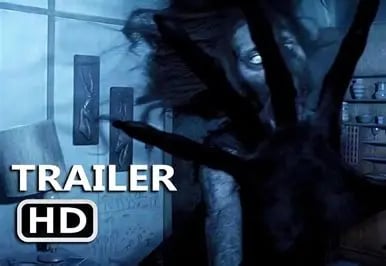
The interior of the house is unkempt and cluttered. Seo-yeon begins tidying up and, after looking in a closet, finds an old portable phone. She uses it to call the number of her lost phone. Someone answers, demands a reward for returning the lost phone, and then hangs up. But then Seo-yeon hears the strange old portable phone ring. She answers, and the caller is a girl who says, “You were right; my mom is insane. I’m totally locked up in the house.” Seo-yeon says, “I think you have the wrong number,” and the caller hangs up.
Seo-yeon visits her dying mother in the hospital. Her mother says she wants to be buried next to Seo-yeon’s father, but Seo-yeon objects. Was there a past incident that makes Seo-yeon feel her mother isn’t worthy of being buried next to her father? She abruptly leaves the hospital and visits her father’s grave. The headstone says he died in 1999.
Arriving back at the house, she hears the strange phone ringing again and answers. The same caller as before cries out, “I think mom is trying to kill me.” Seo-yeon again tells the caller she’s got the wrong number, but the caller, Young-sook (Jeon Jong-seo), doesn’t believe her. “Bullshit. Are you doing this on purpose?” Then another hangup. Evening descends, and while she’s resting, we see that Seo-yeon has burn scars on her leg. Was this past burning integral to the event that alienated her from her mother and took her father’s life?
I’ve described quite a bit of the setup, but this is only the first 10 minutes of the film, so skip the rest of this paragraph if you don’t want to read spoilers. As the story unfolds, Young-sook is calling from 20 years earlier. The same portable phone is used by both the caller and the person being called. Seo-yeon and Young-sook will try to coordinate actions so that the past for one and the future for the other might change. A power dynamic emerges that only cleverness and violence can counter, but will it be defeated? Some may say that Lee’s thrilling script is marred by ambiguity; others say not. I’m sure I’ve divulged too much.
The sets are moody. A decaying house in disrepair contrasts with vibrant fields outdoors, making it more compelling when people suffer tragedy in the brisk environment. Jeon Jong-seo’s performance stands out, and it’s clear that Lee’s adaptation was meant to create this character as physical and round. The film isn’t overly effects-laden, but the time-distortion photography and lighting are firmly in the horror camp. The thrill ride is in the tale; what’s going to happen next. Lee’s sharp directing won’t make you have to imagine the narrative.
Yes, the “communication between time periods” idea is derivative, but The Call is a well-crafted exploration of it. We haven’t screened it at our biweekly Bloody Horror Friday Club yet. I give it 3.5 out of 5 stars.
THE CALL

garysvehla509@gmail.com