
Bloody Horror: January
As we enter a new year, Ralph Kirchoff tries to keep up with the latest horror movies.
HORROR/SCIENCE FICTION
by Ralph Kirchoff
1/6/20268 min read
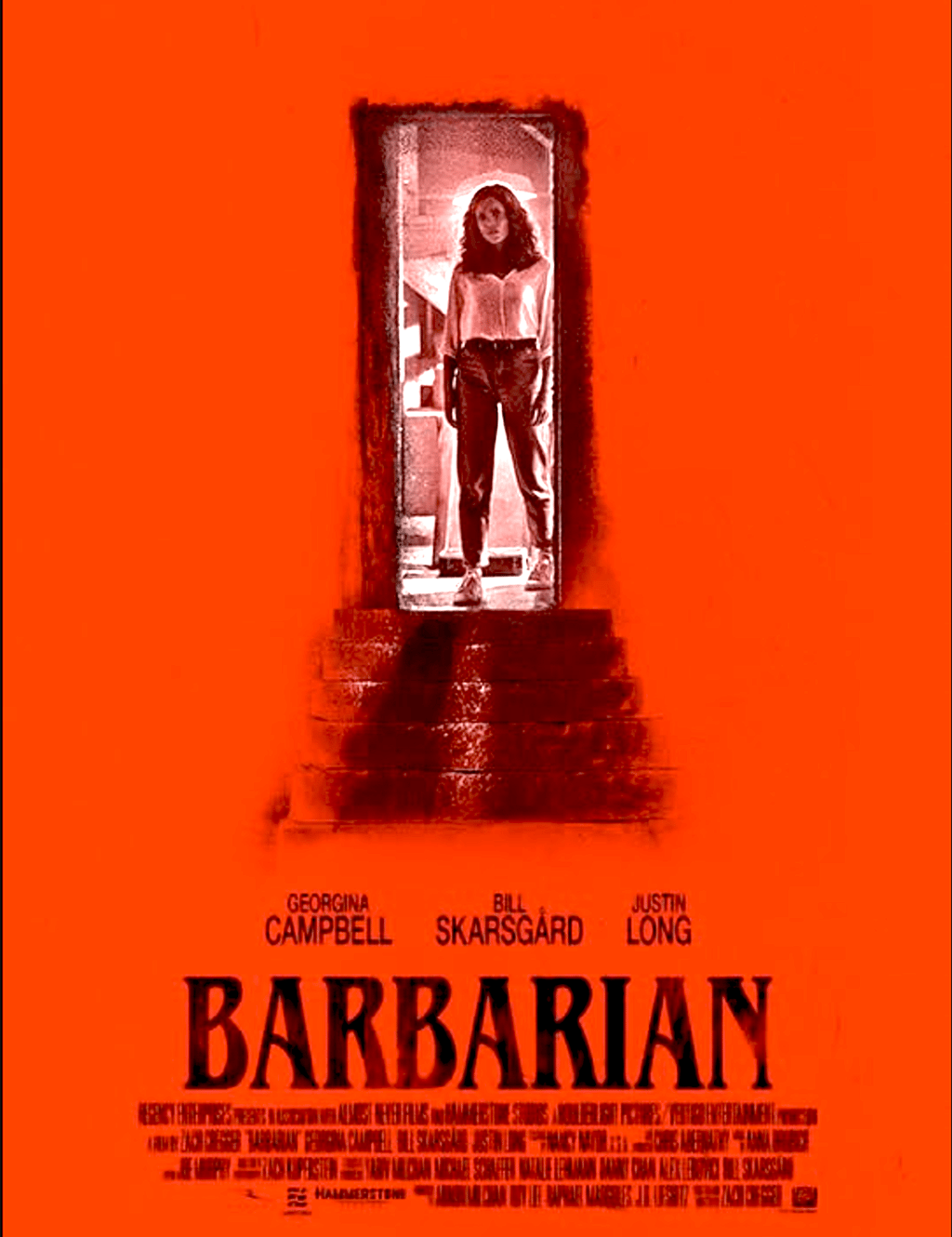
Barbarian
Twisty script, A-list perfs, strong camera work, fearful mood, 3 stars, 1HR 42MIN Regency Enterprises, 2022
Writer/director Zach Cregger is interested in women’s intuition and the ability to recognize impending danger. He crafted a scene that captures these subtle perceptions as the opening of his horror film, Barbarian. Cregger attributes director Sam Raimi’s wacky “visual flair” as a moviemaking influence and the inspiration for the movie’s macabre second half. Whether homage or inspiration, Barbarian earns good marks for its dread-drenched mood and twisted horror ride. I’ll describe some of the film’s setup (spoilers ahead).
Tess (Georgina Campbell) has rented an out-of-town Airbnb near a business meeting she must attend. On a rainy night, with cackling, anguished voices in the soundtrack, she drives to her rental cottage. She can’t unlock the front door. She surveys the surrounding neighborhood, but it’s too dark to see. Noticing a light inside, she rings the doorbell, and … Keith (Bill Skarsgard), a total stranger, answers. He says he has also rented the place, and on the porch, the two discuss a solution as the title, Barbarian, appears in bold pink letters crawling with insects. Is this a red flag? Can Keith be trusted? Should Tess agree to go inside to discuss the matter?
She goes in, but she is wary. Cregger’s camera follows her as she looks down a hallway and asks for Keith’s reservation info. Low tones and chittering percussion play as Tess walks through the rooms. Despite the uneasiness, nothing seems untoward. Is Keith the barbarian of the title, or is Cregger subverting obvious tropes for some greater horror?
Despite initial fears, Tess concedes that on this rainy night, they will both stay in the cottage, sleeping in different parts of the house. Keith says calls will be made in the morning and that the mix-up will be straightened out. But isn’t there danger here? Low tones persist as Cregger’s camera passes the cup of tea Keith made for Tess. Still unsure, she checks the contents of the wallet Keith left on a dresser.
Time passes, and the two have a pleasant conversation. A relaxing ambience takes shape. Cregger’s casting of Skarsgard is sly. In a lighthearted exchange, Keith asks, “Do I look like some kind of monster?” Given the roles Skarsgard has embodied in recent films: Pennywise, Orlok—the joke is in.
Tess and Keith retire to their respective areas of the house. Overnight, Tess is awakened by sinister whispering. She finds her bedroom door has been opened. She hears Keith murmuring in the other room. A jump scare occurs. Camera movement suggests the presence of something unknown and …
… we zip into morning. Tess oversleeps, and Keith is gone. As Tess leaves for her appointment, she notices the dilapidated, abandoned state of the neighboring houses, one and all. Campbell’s vulnerable and confused look is convincing.
Tess’s meeting goes well, but when she tells her associate she’s staying at an Airbnb in Brightmoor, she is warned to be careful. What has happened in that neighborhood? Is it still happening? Low, discordant pulses accompany her return to the cottage, and she is chased by what appears to be a derelict yelling at her to “get out of that house.” Does he mean harm, or is he trying to warn her?
Back in the house to retrieve necessities, Tess gets locked in the basement. The camera picks up all the points: no phone (left elsewhere in the house) and no one else around (or is there?). She rummages around, pulling figurative and literal threads in search of escape, and discovers … a hidden door, a hidden room. Having no choice, she explores. The pulsing synths now throb, John Carpenter style. There’s something bad going on, and Tess sees the signs.
Keith returns and gets her out of the basement. She tells him what she saw, but he seems unconcerned. To allay her fears (and keep her from leaving), Keith promises to go down into the basement to clear up whatever is disturbing her. I’ve now detailed the first third of the movie. Ghoulish horror awaits.
Cregger’s depictions of decay and horror are unexpected and gruesome. As the story unfolds, the camera work feels authentic and coherent with his script. His musical score choices, though a bit obvious, still excel. Campbell and Skarsgard bring their talents, and it’s clear why they’re A-list actors. Late in the film, Justin Long’s portrayal is slimy but firm support.
Barbarian is worth watching; however, once the viewer knows how the threads resolve, only a rare rewatch is merited. Screened separately by members of our biweekly Bloody Horror Friday club, I give it a solid 3.0 stars.
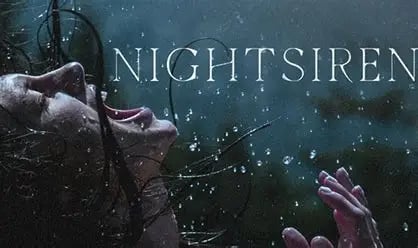
Nightsiren
Nightsiren, Slovakian, good drama involving superstition and violence, slow burn but heats up, unreal ending left up to viewer discussion, 3.5 stars. 1HR 49MIN Moloko Film, 2022
Initially stemming from a book about rural Slovakian superstitions, writer/director Tereza Nvotová developed the concept of how people in modern times can still use these superstitions to blame an innocent person, making them a scapegoat, for their problems. Placing these ideas in a familiar rural setting, Nvotová wrote the script for the compelling horror film Nightsiren. The movie was filmed in a wooded village near Nvotová’s family cabin. The story raises ambiguities throughout its journey. I’ll describe the movie’s plot and conflicts.
A preamble about folklore and medieval superstition appears onscreen. There is low rumbling, then pounding, to blackness. As colors emerge, two small girls, Sarlotta and younger Tamara, are frightened by the sounds and run from their log cabin. Tamara accidentally tumbles over a cliff. Black-and-white credits fade in. Misty images roll by of a lone white-clad woman, a snake, and a wolf moving through the woods. More production credits stream over fantastic aerial photography of thick forests, and we have a Chapter 1 intertitle.
Sarlotta, now a young woman wearing a backpack, hikes through the trees and past the thicket, returning to the wooden cabin of her past. She holds her stomach. Is she pregnant? She remembers the pounding and fire that destroyed her mother’s home. She walks the path she once ran from violence and recalls seeing motionless Tamara at the bottom of the cliff before she ran away. She arrives at her old, abandoned house and enters. But this isn’t the burned-up house from the image she remembered moments before, and Nvotová’s narrative is asking questions of the viewer.
Sarlotta opens an old wooden trunk and examines fetish dolls, amber bottles, curio jars, and a kept tooth, remembering the old women who put these items in the trunk. That night, she gathers things from the woods and sees a group of young people drive up to the cabin to pillage. They laugh and say they need to build a fire for protection from the witch. But there is an undercurrent to their banter. Under the frivolity, there is uncertainty and perhaps belief. The group confronts Sarlotta, and gunshots are fired toward the woods. Mira, one of the women in the group, halts the action by saying they should leave Sarlotta alone.
The next day, Sarlotta investigates the legal summons she received to return to the village of her past. But the authorities she speaks with are unaware of the summons and do not believe it is genuine. Who sent the summons?
She meets townspeople, and there is a vague sense of acquaintance. The people seem to accept her presence, but coolly and at some figurative distance. The narrative is murky here. Apparently, Sarlotta’s mother, along with the townspeople, persecuted the woman she and Tamara eventually came to live with. But why weren’t she and Tamara living with her mother? And why was it that her mother’s house was burned down, and not the home of the woman they were raised by, the house she is currently staying in?
Because of happenstance and past events, the townspeople fear Sarlotta. Many believe a witch raised her. She primarily receives threatening looks from men in neighboring homes. Soon, she is befriended by Mira, and there is a quirky scene of nude moon bathing by moonlight.
Sarlotta continually asks what happened to Tamara (did she survive the fall?) and why her mother’s house was burned down. Her persistence angers the townspeople. Calamities begin to unfold. While frolicking with Sarlotta, a neighborhood child is injured. A symbolic snake is seen being killed by Sarlotta. A goose meant to be eaten at a family meal is found to be tainted. Neighborhood children go missing, lost in the woods.
Mysteries of the past masterfully build an ominous tone. What happened to the wild child taken from the woman the townspeople believed to be a witch? Was Sarlotta’s mother involved in the taking, and is that why Sarlotta lived with the woman rather than her mother?
Answers are offered piecemeal, but real ‘here and now’ danger looms. Rape and murder are threatened as townspeople blame Sarlotta and Mira for their fallen circumstances and demand remedies. Violent behavior swells to a crescendo of terror.
However, is Nvotová giving the viewer a way out? A scene of stylized lightness, a happy future of friendship, warmth, and forgiveness, is set at the height of tragedy and ends the movie. Is this Sarlotta’s near-death dream? Or could this be a choice the viewer can make? Nightsiren is impressive storytelling and filmmaking, a combination of an art film and a morality fable.
We gave Nightsiren 3.5 out of 5 stars during our biweekly Bloody Horror Friday screenings.
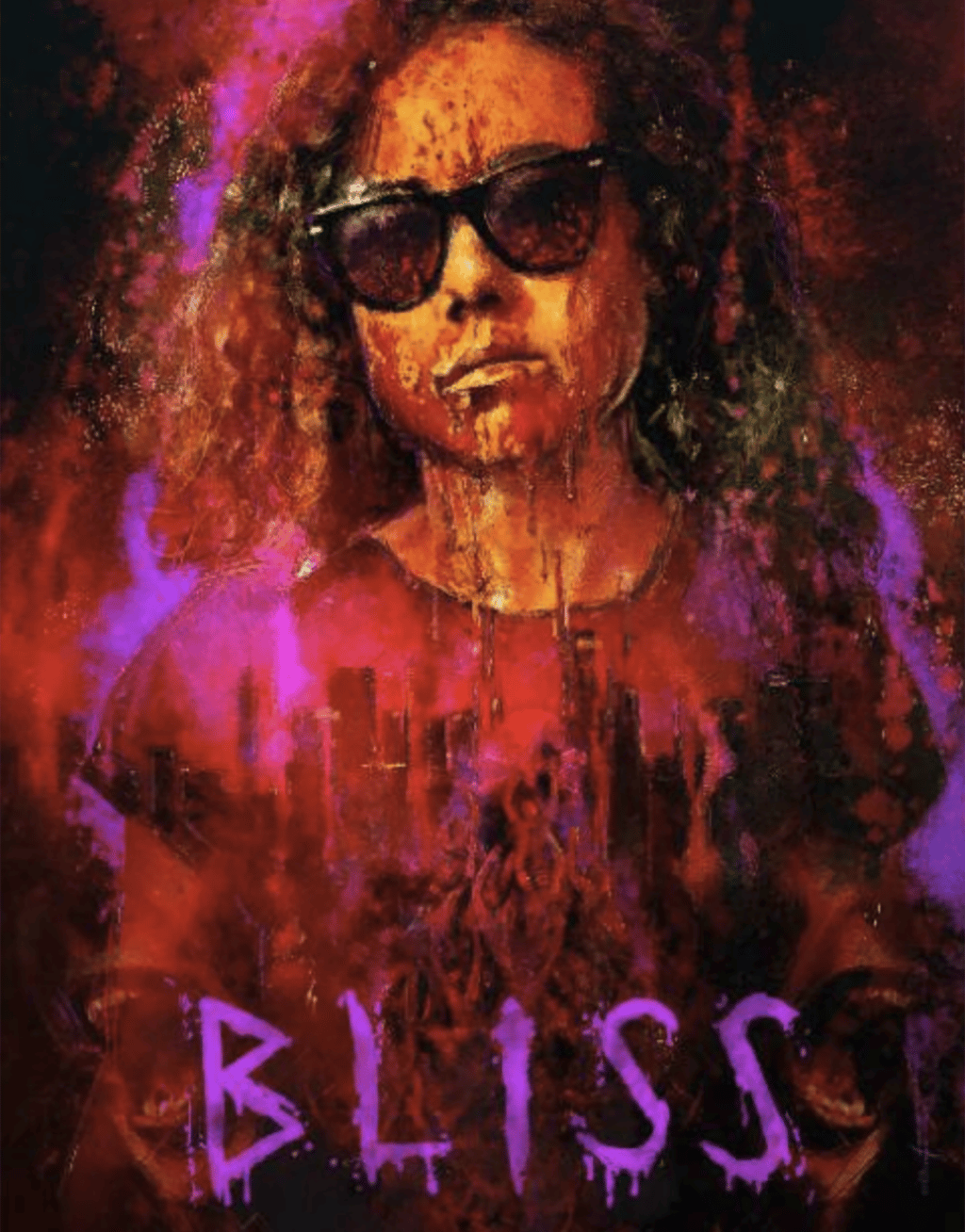
Bliss
Seedy LA-based neo-vampirism, grindhouse feel, accent on color, and “reverby” rock, appealing actors, 3.5 stars. 1HR 20MIN Channel 83 Films, 2019
In a Nightmare on Film Street interview, Writer/Director Joe Begos said that his struggle with drug addiction, coupled with artistic block, influenced his filmmaking. He aspired to infuse his film’s visuals with a “grindhouse aesthetic,” and his bloody opus Bliss (2019) is a testament to color, the creative process, and gore.
Opening credits are painted in primary colors, with lights flashing over punk rock. We meet Dez (Dora Madison). She struggles to find subject ideas to paint on an earthy, textured canvas. Clive (Jeremy Gardner) arrives. They greet and head into town. Her agent has dropped Dez, and he is behind on rent. The acting and dialogue here feel like a first take; the actors are aware of the camera.
Dez makes her way to a friend with drugs and samples Diablo, a blend of cocaine and a mystery drug. As Dez hallucinates, Begos treats us to pink and purple visuals, everything textured. Objects fade in and out in slow motion, mixing homogeneously over delicate psychedelic music. Dez parties all night, and Begos’ camera intercuts hazy 2-shots, druggy attitudes, and pale blue color, all over lots of fuzz guitar and … bloodletting?
The next day, Dez finds direction in her painting, where orange-red worshippers of a central figure of fire begin to take shape. Begos’ camera constantly moves, angles, and swirls around. Yes, the effect is dizzying … and compelling. The viewer wants to see the whole picture develop. It’s going to be her masterpiece, but somehow Dez is in need.
She calls Clive, and … there is more partying and drug use. But it is she who is consumed, and Dez begins to realize that she needs blood. Blood-soaked murders and blood drinking follow. And we will witness an illusory tale of drugs and neo-vampirism. The pairing fits.
The photography is gritty, close-up, and colorful, set in what feel like genuine seedy LA locations. The music drives the narrative as if it were made for it. It’s all sweat and writhing bodies. These actors are beautiful, and the scene’s first take feels appealing. As Dez’ painting is fully revealed, a ‘Picture of Dorian Gray’ vibe is evoked.
Bliss is engaging. It visualizes the deviant and is richly entertaining for enthusiasts of such. Give this one a watch. As yet, we haven’t screened it at our biweekly Bloody Horror Friday Club. I give it 3.5 out of 5 stars.
garysvehla509@gmail.com