
Bloody Horror April
Ralph Kirchoff continues into the Spring reviewing more gory modern horror movies.
HORROR/SCIENCE FICTION
written by Ralph Kirchoff
4/13/20268 min read
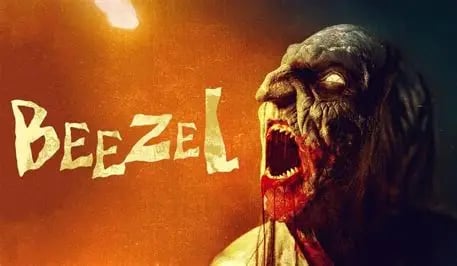
Beezel
Dire episodic witch tale, good camera work and editing, effective shocks, 3.5 stars. 1HR 21MIN Social House Films, 2024
In an internet interview, Aaron Fradkin stated that as a boy, he was frightened of being alone at night. He would hear creaky, weird noises in the basement of his family’s house and imagine creepy things. His first horror-film influences were Sam Raimi’s Evil Dead movies, and he loved their humor.
Fradkin’s first feature film, Val (2021), is about an “escort” that’s really a demon, and where fitting, it does have light irony in places. But he’s been directing darker YouTube shorts for his Social House Films production company for years. Fans should check out his YouTube horror short, The Ballerina (2021), for an example of his macabre sensibilities. And Beezel, directed and written by Fradkin and co-written with his wife, is a dire episodic witch tale that scales high on the fear-o-meter.
As he wanted to tap into the fear he experienced as a child, the film is shot in his actual childhood home. For budgetary reasons, the episodes, each a set piece of terror, all take place in this same house but are separated by decades-long time cycles. Fradkin used various film formats, including 8mm and VHS, to depict different time periods by employing the recording technologies available at those points.
Beezel opens with production credits digitally processed to look like speckled vintage film, and we move right into blurry home movie footage of the Weems family, father Harold (Bob Gallagher), wife, and young son. There’s a foreboding in the accompanying low, dissonant horns.
Then Fradkin switches to a clear modern widescreen camera; it’s May 1966. Young son Avery Weems is playing with his train set when his mother calls him offscreen. Fradkin’s careful attention to detail, flies crawling on a bowl of fruit, and an urgent expression of hunger create the sense that death is in this house. The dissonance grows louder. What follows is a scene reminiscent of the beginning of Andrés Muschietti’s 2017 adaptation of Stephen King’s It. The title "Beezel" wavers between muddy, sonically buried brass and slightly screechy brass.
Next, we have wonderfully cold panning shots of wintry Northeast woods and snowy treetops. Time has passed, and Apollo (LeJon Woods) is making his way, walking miles along snow-covered paths and carrying VHS camcorder equipment. It’s 1987, and Apollo is going to the Weems house. Apparently, he’s being paid by Harold to film a documentary about the “scandal” that took Harold’s "former" family 20 years earlier.
The constant muted strings and horns sound as if they’re meant to convey jungle noises as we see the outside environs of the U-shaped rancher-style house. And we get a small sampling of Fradkin’s witch associative touches as Harold offers “sweets and goodies” to Apollo. Apollo records as Harold divulges that he “knows exactly who’s responsible for the deaths of his wife and son”. Apollo continues to film and follows Harold to the basement for more narration.
A bit later, using the video-processing features of his camcorder, Apollo makes adjustments that reveal hidden images in the recorded footage. Fradkin’s editing here is amazing, and the effect is bone-chilling. I’ll stop here, but most of what I’ve described can be plainly seen in the film’s trailer. So, I don’t think anything significant has been revealed.
The acting is convincing. And in a later episode of the film, Victoria Fratz’s portrayal of the affected character, Nova, is especially fascinating. Fradkin uses practical effects and clever camerawork and doesn’t shy away from the shock. Recommended.
As yet, we haven’t screened it at our biweekly Bloody Horror Friday Club. I give it 3.5 out of 5 stars.
The Gorge
Predictable sci-fi script, big budget, okay time waster, 2.5 stars. 2HR 7MIN Skydance Media, 2025
Writer Zach Dean created a speculative script. Through the Hollywood blockbuster machinery, genre director Scott Derrickson was hired. And voilà, the sci-fi action love story The Gorge was produced.
Drasa (Anya Taylor-Joy) wakes, marks a calendar, and, from a mountain cave, trains her high-powered rifle on an aircraft landing over 2 miles away. A loud Pfffft! and the politico emerging from that aircraft falls dead. As Drasa looks directly at us, we see the plain type white title on a black background … The Gorge.
This movie runs over two hours, and the story’s main conflict develops slowly. I guess, since Apple Original Films signed on to the production, they wanted to fill a large time slot, so we have to wade through considerable exposition.
We now meet Levi (Miles Teller). He rises at night from a simple dwelling and drives to the shore, where he sits by the water and writes in his journal. He is interrupted by a cell phone message telling him to report to a local U.S. Marine base and a high-level diplomat (horror-sci-fi stalwart Sigourney Weaver).
We have a character switch again as we now follow Drasa visiting her mother’s grave in Lithuania. Through conversations, we learn that she works for a fringe group, not to directly shape the world political theater, but to kill for peace. She assassinates warlord oligarchs. Levi and Drasa are snipers, one for each side. Will this be a tale of two conflicting bodies in arms?
Levi accepts his mission, air-drops to a location unknown, surveils, and meets the colleague he’s replacing, Jasper (Sope Dirisu, who is terrific in the Netflix crime series Gangs of London). Levi’s mission is to be stationed in a secret observation/sentry tower overlooking the gorge, and there will be an Eastern Bloc counterpart, Drasa, stationed on the opposite side of the gorge. Thus, the principals are set in place, and we will witness a sci-fi monster movie, a burgeoning love story, and, of course, corporate betrayal.
The cinematography looks expensive, with deep-focus outdoor photography of huge fog-shrouded sets featuring war apparatus and twisted trees. There’s camera movement all the time. Even in conversations, there are lots of varying-angle 2-shots and very few still shots.
Plaintive electric piano and occasional flute are the accompaniment in scenes where Levi is alone in his quarters or writes in his journal. This solitude in sound design is broken by inflated guitar rock songs as romance blooms. And with monster action, there are raspy synths and flatulent horns.
I guess these are A-list actors, but the leads don’t rise above 2D. I wish the supporting actors Weaver and Dirisu had been used more, but this isn’t a story for an ensemble cast. The choreographed action and the fast dialogue all feel cliché-ridden.
The creature design isn’t impressive to me. The “hollow men” are tree-like, deformed humans with claw-like hands. There are plenty of them, but they’re kind of all alike. I crave creatures and kept hoping for an ultimate creature that looked like the kitchen sink was thrown into its design. It didn’t happen.
This film was written and directed by separate screenwriters, and it shows. The movie isn’t intimate, has a by-the-blockbuster-numbers feel with big sets and lots of money spent on mega-bit CGI monster effects. IMO, it’s only okay for a time waster. Screened separately by members of our biweekly Bloody Horror Friday club, I give it 2.5 stars.
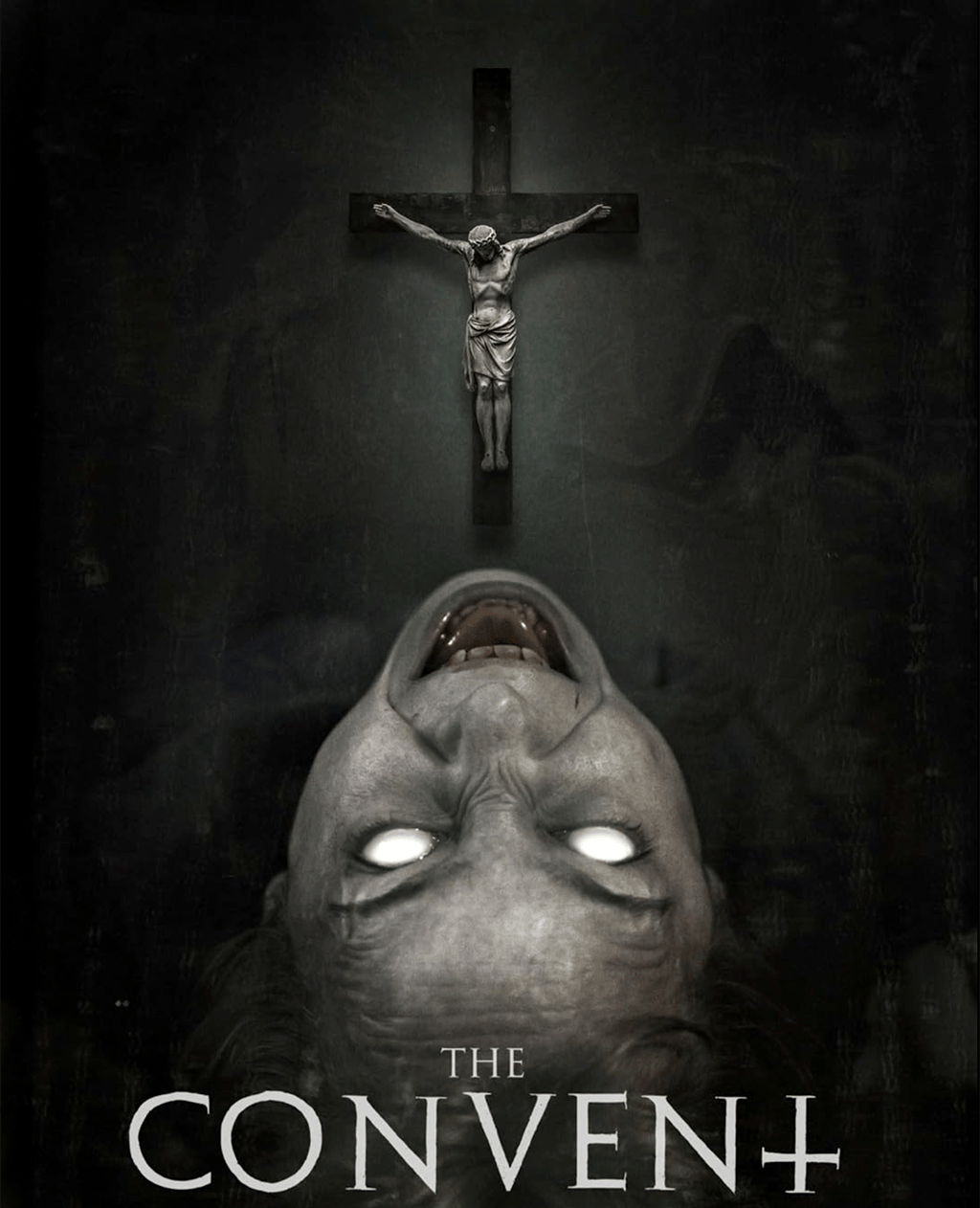
The Convent
Oh my the Spanish don't mess around!, disturbing and strangely thrilling ghost possession romp in religion setting, very affecting mood and direction, 4 stars. 1HR 20MIN Del Toro Films 2023
She’s been called “shock-and-awe royalty”, and Argentinian director Tamae Garateguy’s ‘wow’ inducing supernatural horror film The Convent is compelling evidence. The film is also known by the titles Auxilio: The Power of Sin and simply Auxilio.
Written by Miguel Forza De Paul, the story, as best as I can determine, is set in Buenos Aires in what could be anytime between the 1930’s to the 1970’s. It involves wrongfully committed women and a strong ghostly presence. Is this presence the result of betrayal by secular guardian or spiritual stewards, both, neither? Let’s describe some of the film’s characters and plot points.
Emilia (Cumelen Sanz) is a 20-something headstrong girl, an aspiring writer, still under her military father’s custodianship. Because she’s been behaving “more like a man”, in other words she’s displaying independence, her father wants to tame her, reign her in and then marry her off to a prestigious general thereby gaining standing for himself. So, he ‘checks her in’ to a convent run by the Mother Superior (Marcela Benjumea) who proclaims there is no one above herself except the Bishop and God. Are we going to see abuse of authority?
The convent is vast and has places of worship, room quarters, confessional areas, and a large torture device laden catacomb. Garateguy’s camera sweeps through these spaces but finds the intimacy in the corners and in the secret places.
The Mother Superior’s tone is sarcastic as Emilia is instructed to adhere to the rules, not wear trousers and not smoke. Somber cellos follow Emilia’s path to the monastery where she meets Carmen. A pipe organ gloriously swells as Father Eduardo (Gerardo Romano) conducts the services. In this opening act of the film, Carmen, in her way, slowly divulges incriminating information regarding Father Eduardo’s brutal treatment of Adele (Eva Dans). But was it deserved? Where is Adele?
The two distinct groups of women in the nunnery are nuns, including the Mother Superior, and women that are deemed ‘disturbed’. I don’t want to provide too many insights relating to the potential conflicts. I’ll just say that this latter group of women endures abuse and is targeted by ghostly influences in eye opening ways. Are these women being emotionally freed, or is this influence evil? There is a mystery to unearth.
For a good portion of the film the viewer doesn’t know; are there multiple antagonists? There’s the ghostly Adele, the Mother Superior, then Father Eduardo, and later more and more shade is thrown onto Emilia’s father. But these directions shift as the story develops. The uncertainty reflects wonderful editing and script realization.
While mystery unfolds, the sound design is mostly quiet with echoey footsteps and creaking doors in the huge building. Outdoor shots are lush with earthy greens compared to old stale convent interiors. Scenes outdoors have chickens clucking and wood knocking as it’s thrown into a brick incinerator. As the camera pans from character to character, dramatic piano notes linger and subtle orchestration rises.
Throughout the film, Garateguy uses slow zooms to show questioning faces and faces full of the fear of encroaching horror. And as is common in Spanish films I’ve seen, Garateguy doesn’t shy away from blood. Since her camera follows Emilia, we know Emilia could be central to a solution. The acting is involving and delicious, or is it the directing. This movie is a whole, a masterful blend.
The movie’s female nudity is ‘abundante’, and I suspect that males might be the horror fans that find it most captivating. But in terms of bloody depictions, the ghostly, and horror, Garateguy goes for it with drama and style. Leo picked this one as a second feature for one of our biweekly Bloody Horror Friday screenings, and by its end I had butterflies in my stomach. We gave it 4 out of 5 stars.
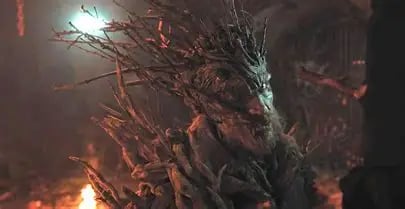
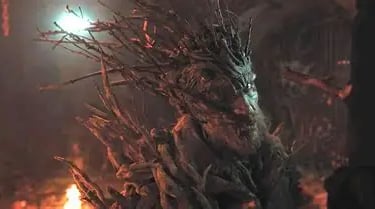
ONE OF THE HOLLOW MEN FROM THE GORGE
garysvehla509@gmail.com